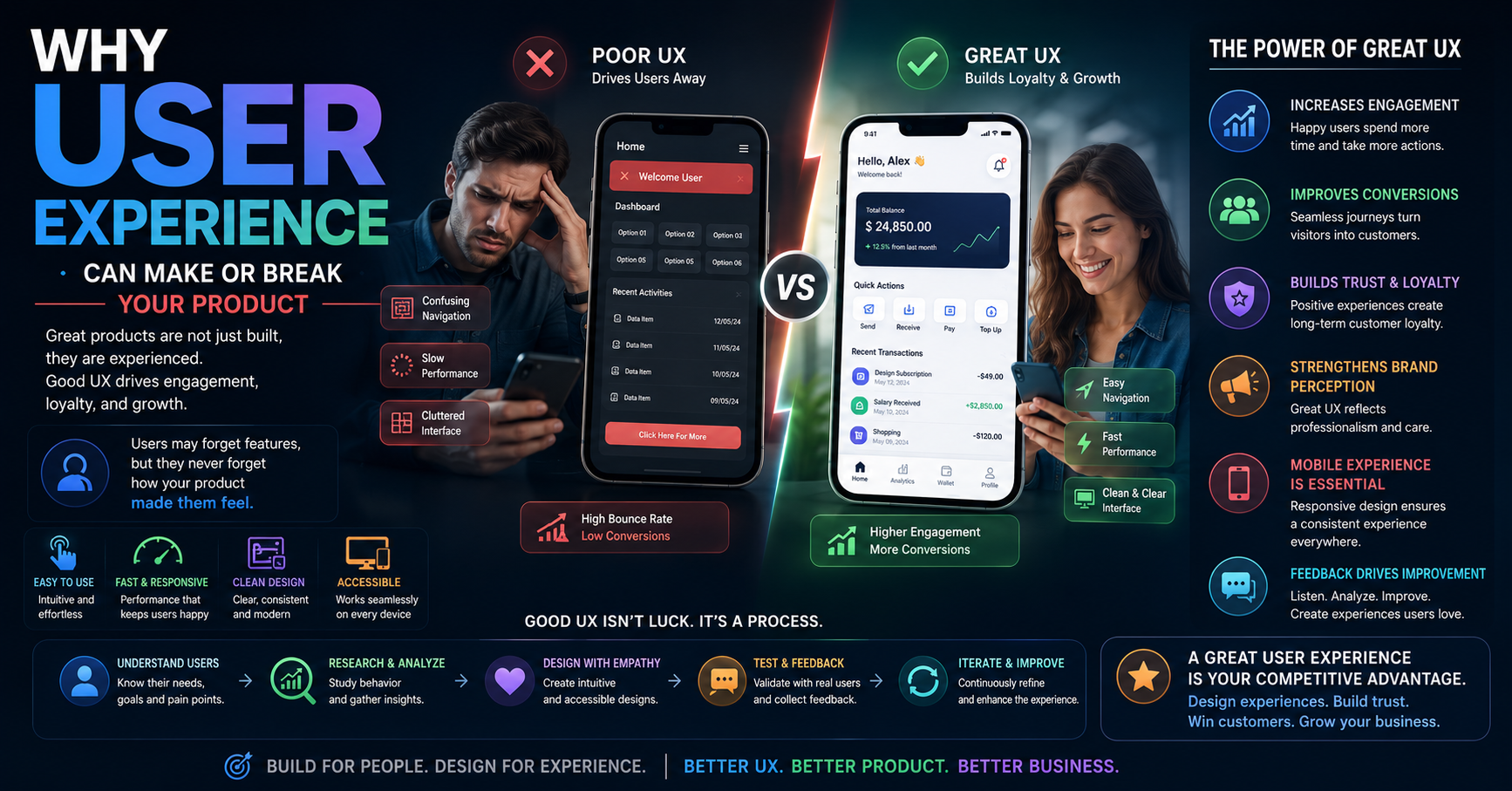
Why User Experience Can Make or Break Your Product
In today’s highly competitive digital market, building a functional product is no longer enough. Users expect products that are intuitive, fast, visually appealing, and easy to use. This is where User Experience (UX) becomes a critical factor. A great user experience can drive engagement, loyalty, and growth, while a poor experience can quickly push users toward competitors.
No matter how innovative your product is, users will abandon it if interacting with it feels frustrating or confusing.
What is User Experience (UX)?
User Experience refers to how users feel when interacting with a product, website, or application. It includes everything from navigation and design to speed and usability.
A strong UX focuses on creating seamless and meaningful interactions that help users achieve their goals effortlessly.
- Easy and intuitive navigation
- Fast and responsive performance
- Clear and consistent design
- Accessibility across devices
Users may forget features, but they never forget how your product made them feel.
First Impressions Matter
Users form opinions about your product within seconds. A cluttered interface, confusing layout, or slow loading time can create a negative first impression immediately.
A clean and modern design, on the other hand, builds trust and encourages users to explore further.
- Professional design increases credibility
- Smooth onboarding improves retention
- Clear structure reduces confusion
Poor UX Leads to User Drop-Off
Even powerful products fail because of poor user experience. If users struggle to complete simple actions, they are unlikely to return.
Common UX mistakes include:
- Complicated navigation
- Too many unnecessary steps
- Slow performance and lag
- Inconsistent design elements
These issues create frustration and directly impact user retention and conversion rates.
Good UX Increases Engagement and Conversions
When users enjoy interacting with your product, they stay longer and engage more. A well-designed experience guides users naturally toward desired actions.
- Simplified user journeys improve conversions
- Better usability increases customer satisfaction
- Engaged users are more likely to become loyal customers
Great UX removes friction and makes actions feel effortless.
UX Impacts Brand Perception
Your product experience reflects your brand. Users often associate a smooth, polished experience with professionalism and reliability.
A poor experience can damage trust, even if the underlying product is technically strong.
- Positive experiences build customer trust
- Consistent design strengthens brand identity
- Better UX encourages word-of-mouth growth
Mobile Experience is Essential
With the majority of users accessing products through mobile devices, responsive and mobile-friendly UX is critical.
- Mobile-first design improves accessibility
- Faster mobile performance increases engagement
- Responsive layouts ensure consistency across devices
Ignoring mobile UX can result in losing a large portion of potential users.
User Feedback Drives Better UX
The best products continuously improve based on user feedback. UX design is not a one-time task—it’s an ongoing process of testing and refinement.
- Collect user feedback regularly
- Analyze user behavior and pain points
- Improve features based on real usage patterns
This iterative approach helps create products that truly align with user expectations.
UX as a Competitive Advantage
In crowded markets, user experience often becomes the deciding factor between competing products. Businesses that prioritize UX stand out by delivering smoother, faster, and more enjoyable experiences.
- Better UX increases customer retention
- Satisfied users recommend products to others
- Strong experiences create long-term loyalty
Conclusion
User experience can truly make or break a product. A well-designed UX improves engagement, builds trust, increases conversions, and strengthens brand perception. On the other hand, poor UX creates frustration and drives users away.
Building a successful product is not just about adding features—it’s about creating experiences users genuinely enjoy. Businesses that prioritize user experience are far more likely to succeed in today’s digital world.